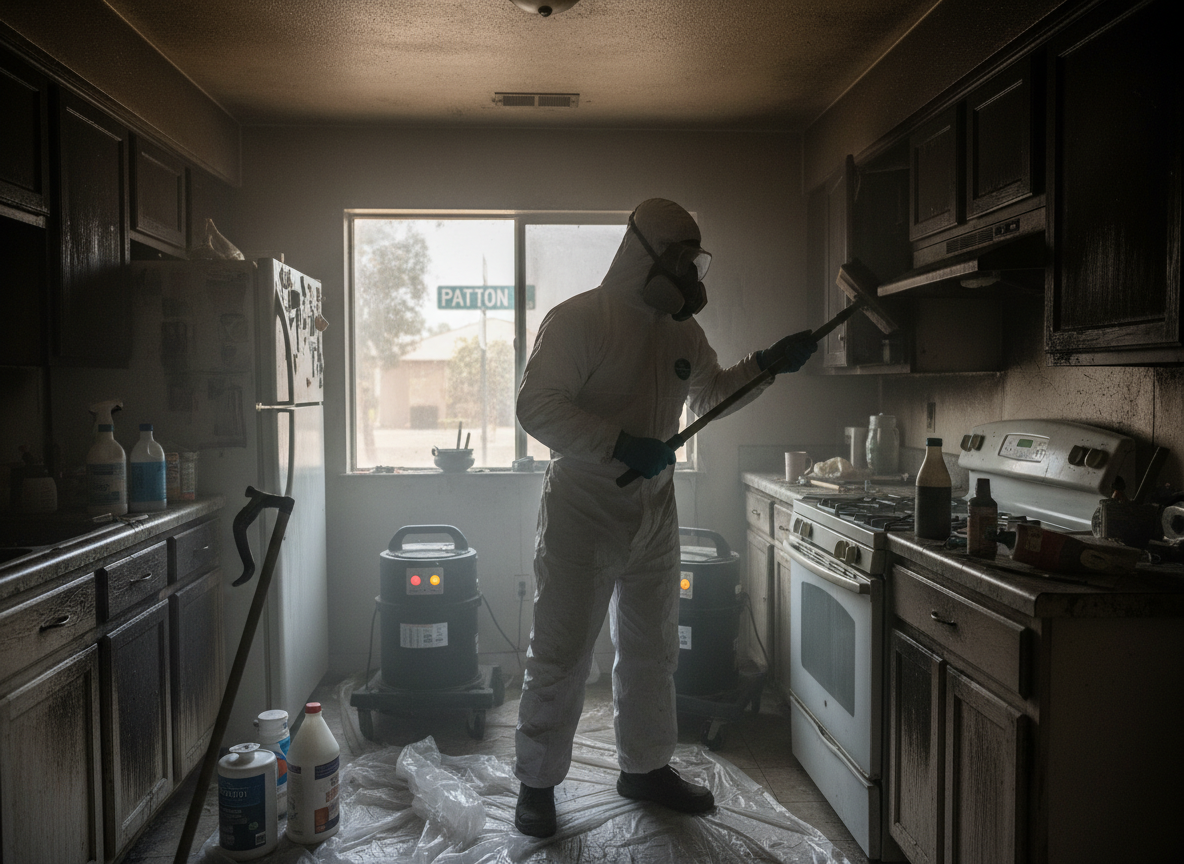
Smoke from structure fires in Patton moves fast through the older stucco and wood-frame homes common around Patton State Hospital. Hot summer days push particulates deeper into drywall, insulation and HVAC systems, while mild winters keep moisture levels high enough for acidic residues to etch metal and concrete surfaces. Crews must test every layer because visible soot on ceilings often hides migration into subfloors and wall cavities that standard cleaning misses.
In San Bernardino County neighborhoods bordering Highland, many homes built before the 1970s have plaster walls and knob-and-tube wiring that trap alkaline smoke. Restoration starts with negative-air machines and HEPA filtration to prevent cross-contamination into unaffected rooms. Odor neutralization requires thermal fogging or hydroxyl generators rather than simple ozone, especially when porous materials like carpet padding or cabinet interiors have absorbed creosote.
Hidden Smoke Pathways in Local Housing
Older Patton homes often have balloon framing and unsealed attic spaces that let smoke travel from the fire room straight into bedrooms without visible char. Technicians open chaseways and remove insulation in sections rather than guessing, then seal with appropriate primers before repainting so odors do not reappear during the next heat wave.
Seasonal Factors Affecting Odor Removal
Mild winters in San Bernardino County slow evaporation, allowing smoke residues to stay damp and reactive longer. Restoration plans adjust by running dehumidifiers alongside air scrubbers for several extra days after initial cleaning, preventing secondary damage to hardwood floors and baseboards common in Highland-adjacent properties.
Technician insight
In Patton, the thing that catches most people out with smoke damage restoration is how the hot summers drive soot deep into the unsealed attic spaces of homes built before the 1970s near Patton State Hospital; homeowners try wiping visible walls and stop, but the residues left in insulation re-emit odors the first time the temperature climbs.
Smoke in Highland Road Home
A kitchen fire sent smoke through an open stairwell into the second floor of a 1960s stucco house. Inspection showed soot had entered the attic insulation and HVAC ducts. Crews isolated the system, removed contaminated insulation sections, cleaned all surfaces, and ran hydroxyl units for three days until no odor remained on retest.
How it works
- 1
Initial Assessment
Technicians inspect all affected rooms, test surfaces for pH levels, and map smoke migration through HVAC and wall cavities.
- 2
Containment and Air Filtration
Negative pressure zones and HEPA scrubbers isolate the work area to stop soot from spreading into clean spaces.
- 3
Soot Removal and Cleaning
Specialized sponges, detergents, and ultrasonic methods clean hard surfaces while porous materials are evaluated for salvage.
- 4
Odor Neutralization
Thermal fogging or hydroxyl treatment reaches trapped residues in insulation and behind fixtures.
- 5
Final Clearance and Restoration
Post-cleaning verification confirms no lingering odors, followed by sealing and any needed repairs.
Pricing
Cost depends on square footage affected, depth of smoke penetration, and whether HVAC or insulation must be removed.