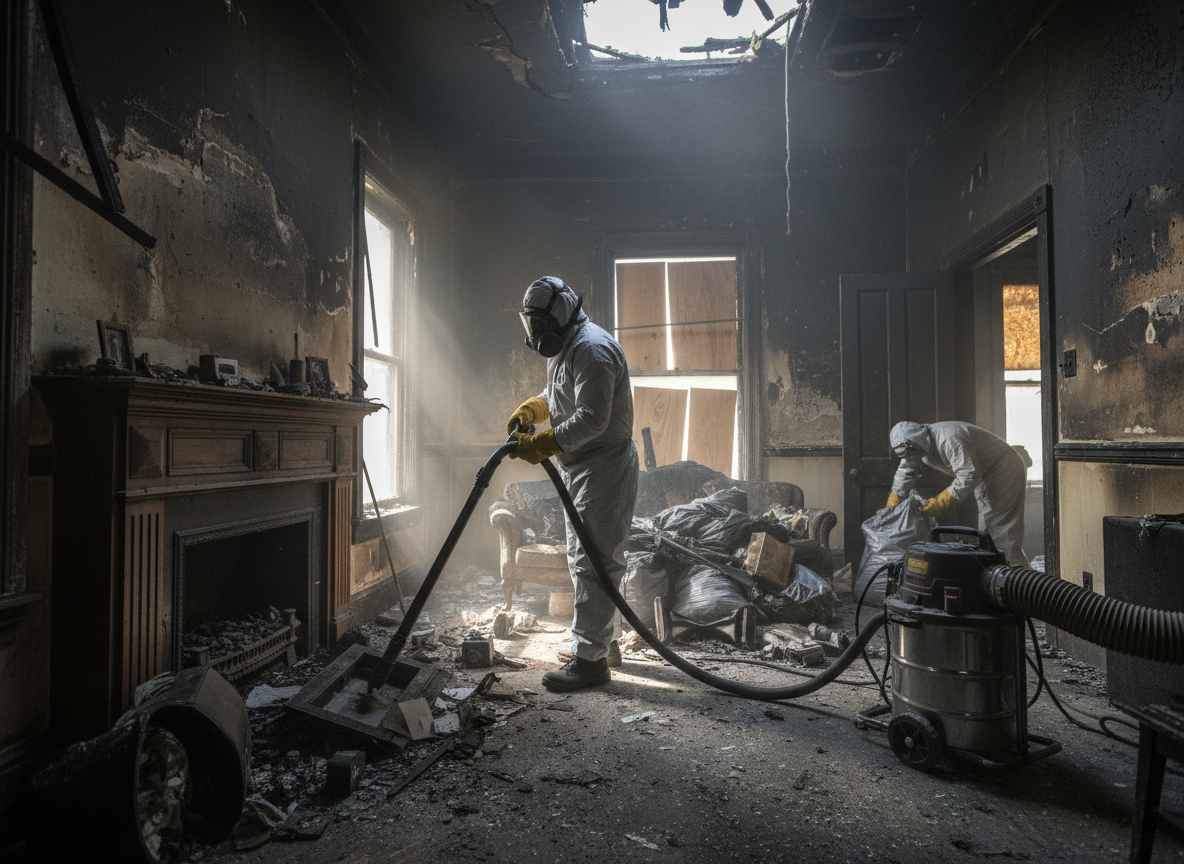
Patton homes built before the 1970s often feature plaster walls and older HVAC systems that trap soot particles deep in ducts and behind baseboards after a fire. Hot summer winds common in the Mediterranean climate push fine ash from nearby Highland and San Bernardino fires into these cavities, requiring negative-air machines and HEPA filtration before any surface cleaning begins. Skipping this step leaves odors that return when winter temperatures drop and heating systems activate.
Cleanup crews working near Patton State Hospital routinely encounter mixed debris that includes burned insulation and melted wiring from mid-century construction. These materials release additional particulates when disturbed, so crews seal rooms with plastic sheeting and establish separate clean and dirty zones before removal. Soil conditions in the area, which retain little moisture during extended dry spells, also mean outdoor ash can be tracked back inside on shoes and equipment unless mats and boot covers are used at every entry.
After initial removal, technicians test pH levels on remaining surfaces because alkaline soot from common household fires can etch tile and concrete floors found in many Patton properties. Neutralizing these residues prevents ongoing corrosion that shows up months later. Final air scrubbing continues until particle counts match pre-loss readings, a step especially important in single-story ranch homes where air circulates through shared attic spaces with neighboring units.
Technician insight
In Patton, the thing that catches most people out with fire damage clean up is how quickly ash from summer winds settles into the unsealed attic spaces of older homes around Patton State Hospital. Homeowners often start wiping surfaces themselves and push the fine particles deeper into plaster cracks, which then requires us to open walls we could have left intact.
Soot in Attic After Highland Wind Event
A single-story home two blocks from Patton State Hospital showed visible smoke damage only in the kitchen after a neighbor's grill fire. Inspection found heavy ash layers throughout the shared attic that had migrated through unsealed ceiling penetrations. Crews isolated the attic, removed the residue with HEPA equipment, and sealed gaps before any living-space cleaning began. Air tests cleared the property without requiring wall demolition.
How it works
- 1
Initial Assessment
Inspect all affected rooms, test surfaces for soot depth, and map HVAC pathways in Patton homes.
- 2
Containment Setup
Install plastic barriers and negative air units to prevent cross-contamination between clean and damaged zones.
- 3
Soot and Ash Removal
Use HEPA vacuums and specialized sponges on walls, ceilings, and contents while protecting flooring.
- 4
Odor Neutralization
Apply thermal fogging or ozone treatments calibrated for the home's size and material types.
- 5
Final Clearance Testing
Run particle counters and visual inspections until levels match unaffected areas of the property.
Pricing
Upfront quotes after on-site inspection; final cost depends on soot penetration depth, number of affected rooms, and whether HVAC systems require full disassembly.