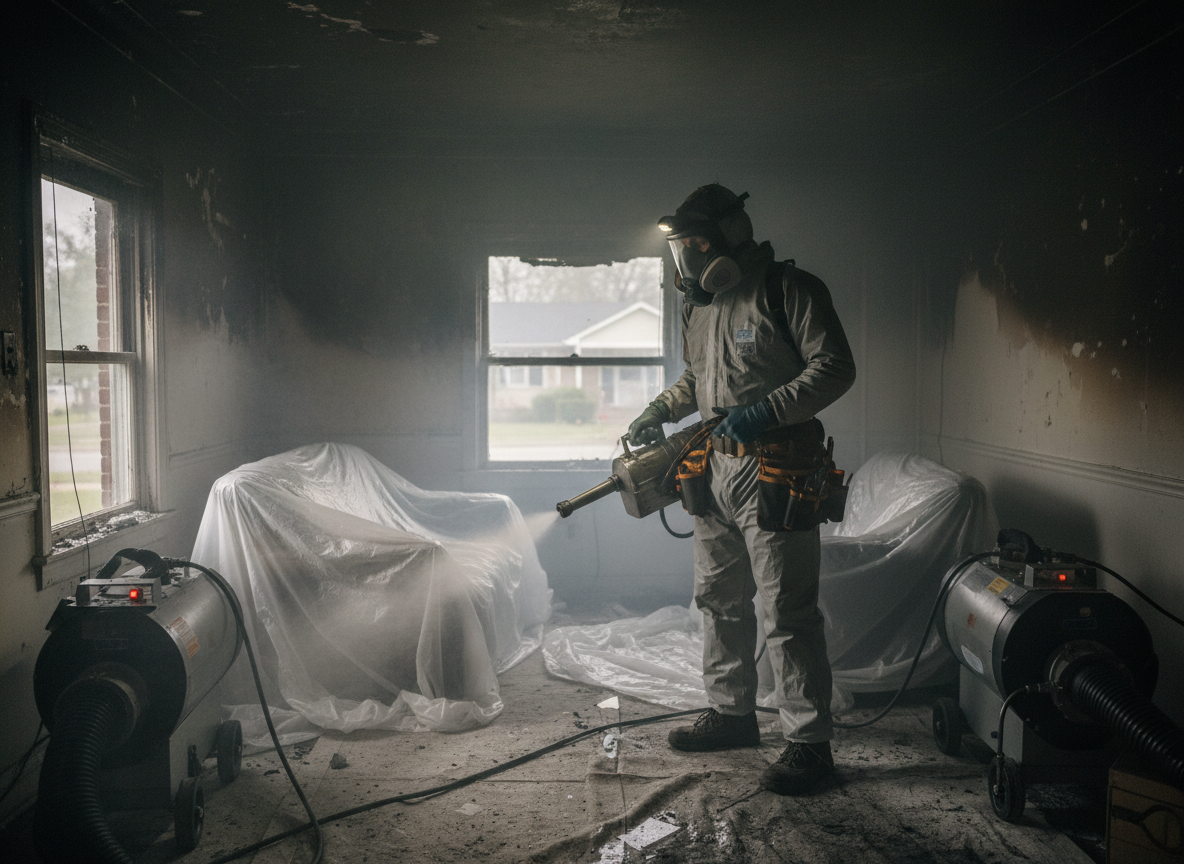
Smoke from structure fires penetrates porous materials like plaster, lathe, and stucco that dominate housing stock built around Patton State Hospital and older neighborhoods in Patton. In San Bernardino County's Mediterranean climate, hot summers accelerate off-gassing from these surfaces, while mild winters slow natural ventilation, leaving odors trapped for months. Standard air fresheners fail because they mask rather than break molecular bonds in charred wood and insulation. Professional teams use hydroxyl generators and thermal fogging calibrated to the specific resins in local building materials, reaching cavities behind walls that DIY ozone units cannot safely access without risking further corrosion in metal fixtures.
Edge cases arise when fires start in garages or kitchens of mid-century homes common between Patton and Highland, where soot travels through shared attic spaces into neighboring units. San Bernardino County building codes require verification that all charred structural members are removed before sealing, or odors will migrate back through new drywall. Technicians inspect HVAC ducts early because the dry, dusty air here carries particulates deep into coils and flex lines, creating secondary odor sources that surface only after the first rain. Homeowners often overlook soil around foundations where water used during suppression leaches smoke residues downward, requiring targeted excavation and treatment in sloped lots near the hospital grounds.
Mild winter nights in the area keep windows closed longer, concentrating VOCs indoors and complicating clearance testing. Teams document every porous surface treated and provide written protocols for re-entry timing based on actual meter readings rather than time estimates. This prevents callbacks when summer heat returns and previously dormant odors reappear from subflooring or attic insulation.
Technician insight
In Patton, the thing that catches most people out with odor removal after fire is how hot summer days pull smoke residues out of the older plaster walls around Patton State Hospital long after initial cleaning. Homeowners close everything up for the mild winters and then wonder why the smell returns when the heat hits.
Kitchen Fire Odor in 1960s Patton Home
Smoke from a kitchen fire migrated through shared attic space into bedrooms. Inspection found residues lodged in original plaster and stucco near Patton State Hospital. Hydroxyl treatment and targeted HVAC cleaning eliminated the odor. The family returned without secondary smells surfacing during the following summer.
How it works
- 1
Initial Assessment
Technicians inspect all affected rooms, test air quality, and map smoke migration paths through attics and shared walls typical in Patton homes.
- 2
Source Removal
All charred debris and heavily contaminated insulation are removed before any odor treatment begins to prevent recontamination.
- 3
Neutralization Application
Hydroxyl and thermal fogging equipment treat porous surfaces and HVAC systems, followed by HEPA air scrubbing.
- 4
Clearance Testing
Independent air sampling confirms odor elimination before final cleaning and homeowner walkthrough.
Pricing
Cost depends on square footage affected, number of rooms with embedded smoke, and whether HVAC ducts require separate cleaning.