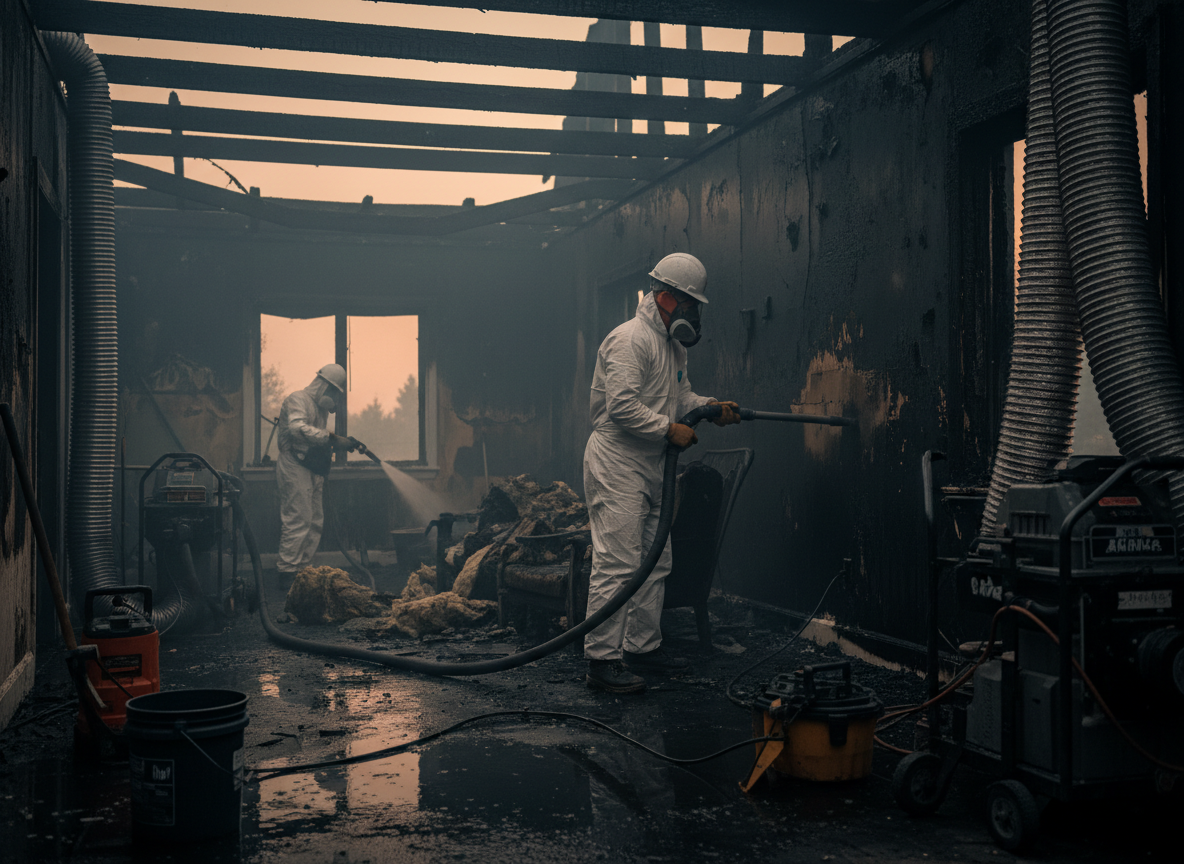
Patton sits in San Bernardino County under a Mediterranean climate of hot, dry summers that drive rapid smoke migration through older wood-frame and stucco homes clustered around Patton State Hospital. When a fire occurs, soot travels through shared attic spaces and single-wall construction typical of the area, settling in HVAC ducts that run under the mild winter floors. Technicians must first isolate these pathways before any cleaning begins, or residue re-circulates for weeks after the initial event.
Highland and San Bernardino neighborhoods nearby feature 1950s-1970s ranch houses with knob-and-tube wiring and unsealed crawl spaces. These conditions create hidden char pockets that standard visual checks miss. Restoration crews open specific wall sections, test for pH levels in soot, and remove affected insulation without disturbing lead paint layers common in county housing stock. Failure to address these pockets leads to recurring odor complaints once summer heat returns.
Emergency protocols prioritize board-up within the first two hours to prevent wind-driven ash from the surrounding foothills from entering exposed interiors. Crews then deploy air scrubbers sized for the square footage of Patton homes, which often lack modern vapor barriers. Final clearance includes surface pH testing and HVAC filter replacement before occupants return.
Technician insight
In Patton, the thing that catches most people out with Emergency fire damage restoration is how our hot dry summers let soot travel through unsealed attics in the older homes around Patton State Hospital and settle deep in the HVAC trunks that run under the floors. Homeowners start wiping surfaces themselves and push the fine particles into the ductwork, turning a one-day cleanup into repeated filter changes all season.
Attic Fire Spread in Highland
Soot from an attic electrical fire migrated through a 1960s Highland ranch house near the Patton line. Inspection showed residue inside the main trunk line and behind kitchen cabinets. Crews sealed the system, removed affected insulation, and cleaned all surfaces before re-testing air quality.
How it works
- 1
Secure and Assess
Board up openings and document all affected rooms, attics, and ducts in the Patton structure.
- 2
Contain Smoke Migration
Isolate HVAC runs and seal doorways to stop soot from moving into unaffected areas of San Bernardino County homes.
- 3
Remove Residue
Extract charred materials and neutralize acidic soot on remaining surfaces using appropriate agents.
- 4
Clean and Verify
Scrub surfaces, replace filters, and test air quality before releasing the property.
Pricing
Upfront quotes provided after on-site inspection; final cost depends on square footage, soot depth, and HVAC involvement.