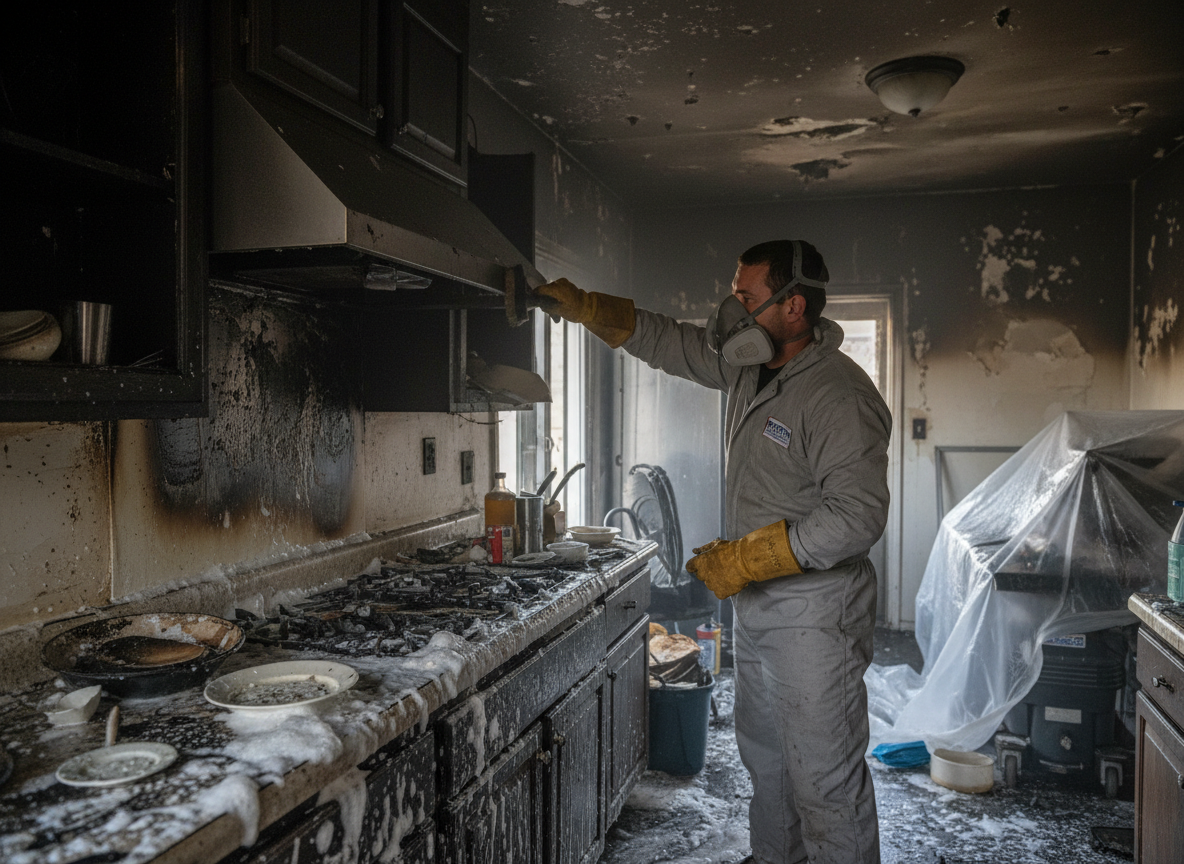
Kitchen fires in Patton often start at the stove or oven and spread quickly through older homes built before modern fire codes. Grease and oil residues bond to cabinets, drywall, and HVAC systems, requiring specialized degreasers and HEPA filtration to prevent re-soiling. Hot summers in the Mediterranean climate can accelerate odor retention in attics and wall cavities, while mild winters mean less natural ventilation to clear smoke.
Technicians must check for hidden damage behind appliances and in ductwork common to Highland and San Bernardino homes. Soot from kitchen fires carries acidic compounds that etch metal and discolor plastics if left untreated. We test surfaces for pH levels and use corrosion inhibitors on exposed wiring and fixtures before sealing.
Edge cases include fires that reach the range hood and exhaust fans, pulling contaminants into shared walls of multi-unit properties near Patton State Hospital. Drywall replacement is often needed when insulation absorbs odors, and we coordinate with San Bernardino County permitting for any structural repairs.
Homeowners should avoid running HVAC systems until ducts are cleaned, as recirculated air can spread particles throughout the house. We document all affected materials with photos for insurance and focus on restoring rather than replacing where possible.
Technician insight
In Patton, the thing that catches most people out with Kitchen fire cleanup is how quickly grease soot migrates into the single-wall construction common in homes around Patton State Hospital. Hot summer days pull those particles deeper into drywall before you even notice the smell in adjacent rooms.
Stove-Top Fire Spread to Cabinets
A cooking fire in a Patton kitchen spread grease smoke into upper cabinets and the HVAC return. We found acidic residue on wiring and insulation behind the range. After containment and targeted cleaning, odors were eliminated and the system passed air quality testing.
How it works
- 1
Initial Assessment
Inspect kitchen, test for hidden soot in vents and walls, and document damage extent.
- 2
Containment and Safety
Set up barriers, shut down HVAC, and remove immediate hazards like charred cabinetry.
- 3
Soot and Residue Removal
Apply degreasers to surfaces, clean ducts, and extract smoke particles from porous materials.
- 4
Odor Neutralization
Use ozone or hydroxyl treatments in affected rooms and attics to eliminate lingering smells.
- 5
Final Inspection
Verify clearance with air quality checks and prepare surfaces for any needed repairs.
Pricing
Pricing depends on fire size, affected square footage, and whether HVAC or structural repairs are required. Upfront quotes provided after inspection.