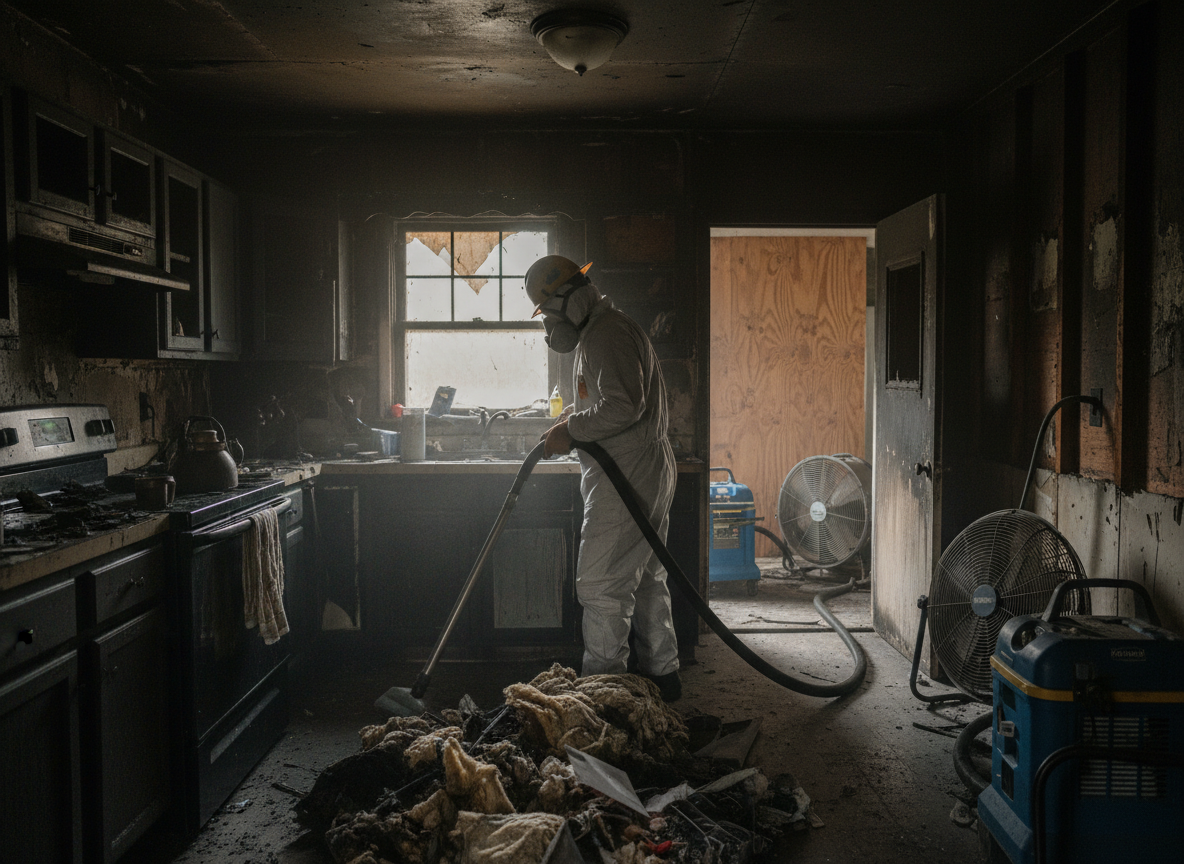
Patton sits in San Bernardino County with a Mediterranean climate of hot, dry summers and mild winters. Older single-family homes near Patton State Hospital and along Highland Avenue often feature aged plaster, knob-and-tube wiring, and lath-and-plaster ceilings that trap soot deeply. Summer heat accelerates smoke odor penetration into insulation and HVAC ducts, requiring removal rather than sealing in many cases. Technicians must account for the county's occasional Santa Ana wind events that push embers and fine particulates into attics and wall cavities long after the fire is out.
Restoration work here frequently involves distinguishing between surface soot and embedded residue in porous materials common to pre-1970 builds around Highland. Mild winter temperatures reduce freeze risks during drying but increase humidity-related corrosion on metal fixtures and electrical boxes if moisture from suppression efforts is not extracted promptly. Local crews prioritize negative-air containment to prevent cross-contamination into unaffected rooms, especially in compact layouts typical of Patton neighborhoods where shared walls can allow smoke migration.
Code considerations in San Bernardino County include verifying updated electrical and insulation standards after fire events, since many Patton properties predate current requirements. Edge cases include hidden charring in balloon-framed walls that only appears after selective demolition. Upfront assessment of soil and foundation moisture from firefighting water is essential because clay-heavy soils in the area retain water and can affect slab integrity if not addressed before reconstruction.
Technician insight
In Patton, the thing that catches most people out with Fire damage restoration near me is how summer heat and dry winds drive smoke deep into the loose-fill insulation common in 1950s homes near Patton State Hospital. Homeowners often think wiping visible surfaces is enough, but the residue stays in the walls and reappears with the next temperature swing unless the cavities are opened.
Attic soot migration after kitchen fire
A home two blocks from Patton State Hospital experienced a stovetop flare-up that sent smoke into the attic through an old chase. Inspection revealed fine soot embedded in fiberglass batts and along rafters that standard cleaning would miss. Crews removed the insulation, treated the framing, and restored airflow in the HVAC trunk line. The family returned without lingering odor after two weeks.
How it works
- 1
Emergency Assessment
Arrive on site within hours to document visible damage, test for hidden smoke in cavities, and secure the structure against further weather exposure.
- 2
Containment and Removal
Set up negative air machines and remove charred debris plus affected insulation and drywall to prevent soot spread into living spaces.
- 3
Deep Cleaning and Odor Neutralization
Apply specialized agents to porous surfaces and HVAC systems, followed by thermal fogging or ozone treatment calibrated for the dry local climate.
- 4
Rebuild and Final Verification
Replace structural elements to current San Bernardino County standards, reinstall finishes, and conduct clearance testing before occupancy.
Pricing
Upfront quotes provided after on-site inspection; cost varies with square footage affected and extent of hidden damage in older Patton homes.