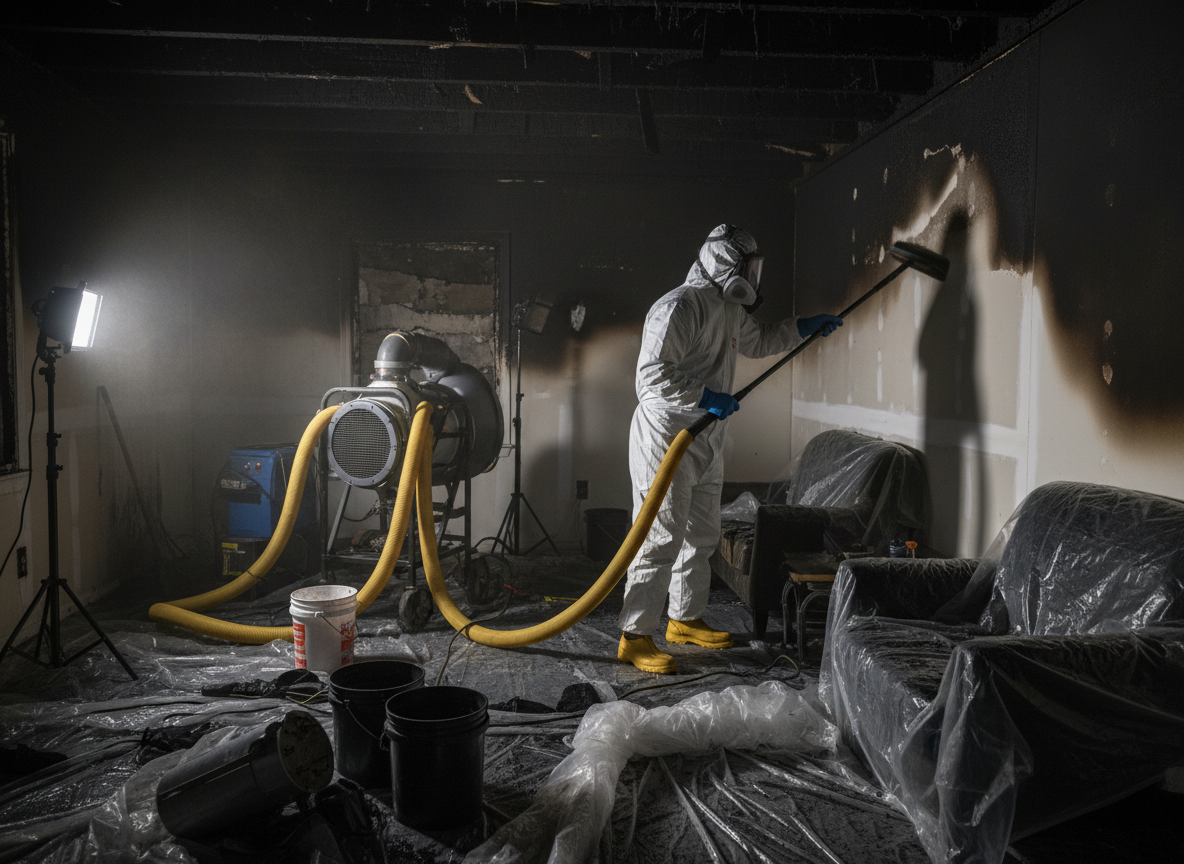
Patton sits in San Bernardino County with a Mediterranean climate of hot, dry summers that drive smoke deeper into older stucco and wood-frame homes common around Patton State Hospital. Summer heat bakes soot onto plaster walls and into HVAC ducts, turning light smoke residue into permanent etching if not treated within days. Mild winters reduce natural ventilation, so trapped odors linger longer in single-story ranch houses built before 1970 that still dominate Highland and Patton streets.
Restoration crews here routinely deal with porous materials like popcorn ceilings and original hardwood floors that absorb smoke particulates differently than newer drywall. When a kitchen fire spreads through shared attics in these older blocks, crews must pull insulation and test for hidden char before re-insulation, because San Bernardino County code requires full removal of contaminated material rather than surface cleaning. Hot summer winds can also carry embers across yards, creating multiple ignition points that homeowners miss until drywall is opened.
Mild winter rains occasionally follow fires, introducing moisture into already compromised wall cavities and turning soot into acidic slurry that corrodes wiring and copper pipes. Local crews therefore prioritize dehumidification and air scrubbing immediately after initial assessment, especially in homes within a half-mile of the hospital where older electrical systems complicate safe power isolation. Skipping this step in the local climate often leads to recurring odor weeks later when temperatures rise again.
Technician insight
In Patton, the thing that catches most people out with fire and smoke damage restoration is how quickly summer heat sets soot into the original plaster and popcorn ceilings around Patton State Hospital. Homeowners try wiping it themselves and push the residue deeper into the texture, forcing us to remove far more material than if we had reached the job first.
Smoke Migration in a Patton Duplex
A kitchen grease fire in one unit sent smoke through a shared attic into the neighboring home near Highland Avenue. We opened the ceiling, found heavy soot on rafters and insulation, removed the contaminated material, cleaned all surfaces, and ran hydroxyl treatment for three days until odors were gone and the unit passed clearance testing.
How it works
- 1
On-Site Assessment
Technicians inspect char patterns, test surfaces for smoke penetration, and map affected HVAC runs in Patton homes.
- 2
Containment and Safety
Plastic barriers and negative air machines isolate the work zone while crews verify electrical and structural stability.
- 3
Soot Removal and Cleaning
HEPA vacuums, specialized sponges, and pH-neutral solutions clean walls, ceilings, and contents without spreading residue.
- 4
Odor Neutralization and Drying
Ozone or hydroxyl generators combined with dehumidifiers treat remaining smells and prevent moisture issues in the dry climate.
- 5
Final Clearance and Repairs
Air quality testing and visual inspection confirm the space is ready for reconstruction or occupant return.
Pricing
Upfront quotes provided after on-site inspection; final cost depends on square footage affected, material porosity, and HVAC involvement.