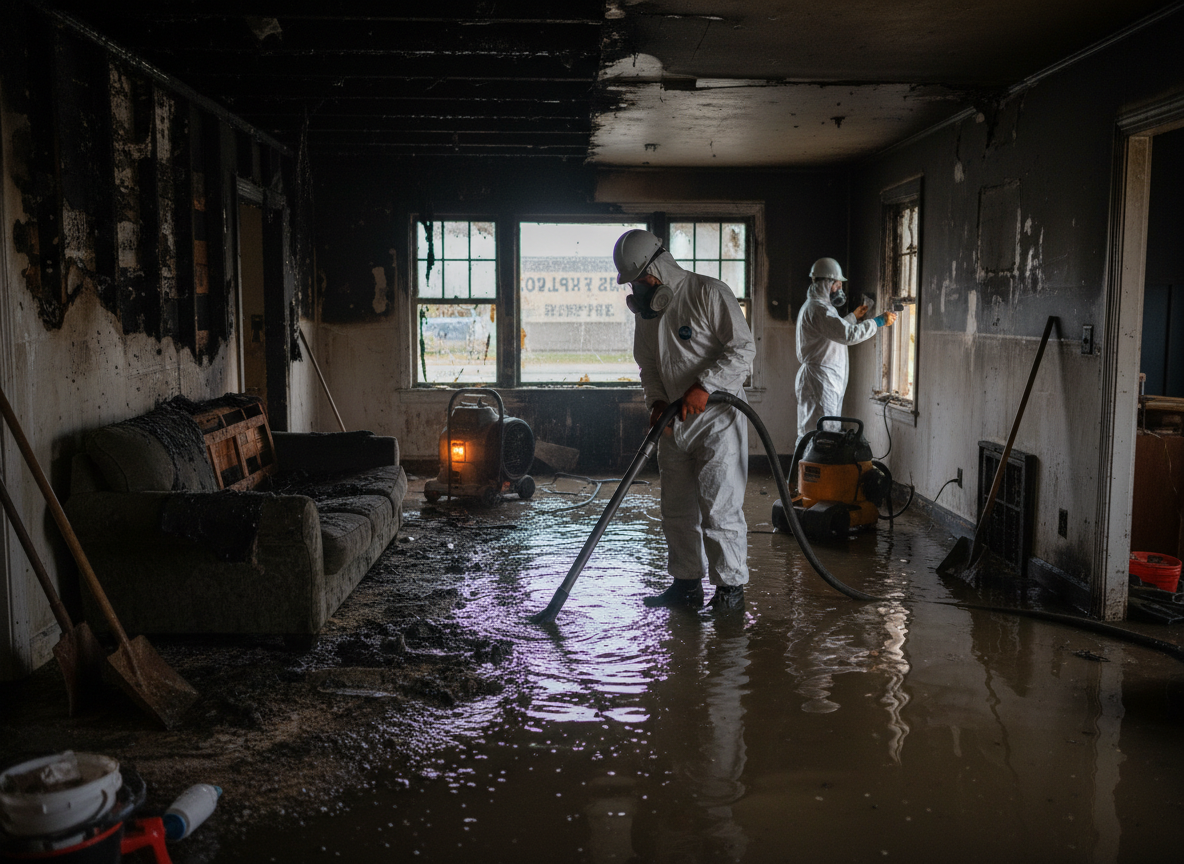
In Patton and nearby San Bernardino and Highland, older single-family homes built mid-century often feature plaster walls and older electrical systems that complicate fire and flood restoration. Hot summer temperatures accelerate mold growth once water from suppression efforts saturates insulation, while mild winter rains can re-wet already compromised structures if drying is incomplete. Crews must pull baseboards early and monitor moisture in crawl spaces common to the area to prevent hidden rot along slab edges.
Smoke residue from structure fires travels through shared attics in Patton neighborhoods, settling on HVAC ducts that run between homes near Patton State Hospital. Floodwater following suppression mixes with soot to create acidic conditions that etch concrete foundations and corrode copper lines. Restoration requires separating affected zones quickly to avoid cross-contamination into unaffected living areas during the dry-out phase.
San Bernardino County building codes require permits for any electrical or plumbing work uncovered during fire and flood restoration, especially when knob-and-tube wiring is discovered in pre-1960 homes. Technicians document every step of water extraction and deodorization because insurance adjusters in the region scrutinize claims involving both fire and subsequent water intrusion.
After initial assessment at 3102 E Highland Ave, crews deploy air movers sized for the square footage typical of Patton lots while running dehumidifiers continuously through the hot afternoons when ambient humidity spikes. This prevents secondary damage that can appear weeks later in wall cavities once temperatures drop.
Technician insight
In Patton, the thing that catches most people out with Fire and flood restoration is how quickly summer heat turns trapped moisture under older hardwood floors into mold before the insurance paperwork even clears. Homes near Patton State Hospital often share attic spaces, so smoke travels farther than homeowners expect once suppression water is introduced. We always pull a few floorboards early to check the subfloor rather than guessing from surface readings alone.
Highland Avenue Home After Kitchen Fire
Suppression water reached the crawl space beneath a 1950s Patton house and mixed with soot. We found standing water against the foundation footings and smoke residue in the shared attic. Extraction and targeted drying prevented mold growth, and the home was returned to pre-loss condition without additional demolition.
How it works
- 1
Initial Assessment
Technician inspects fire and water damage on site, noting affected materials and hidden moisture pockets in Patton homes.
- 2
Water Extraction and Containment
Remove standing water and set up containment to stop smoke and soot migration into clean zones.
- 3
Drying and Monitoring
Place drying equipment and check moisture levels daily until readings match unaffected areas in the structure.
- 4
Smoke and Odor Removal
Clean surfaces and apply odor neutralization specific to the mix of soot and flood residue.
- 5
Final Repairs and Handover
Complete cosmetic fixes and walk through with the homeowner before equipment removal.
Pricing
Upfront quotes provided after inspection; final cost depends on square footage affected and materials requiring replacement.