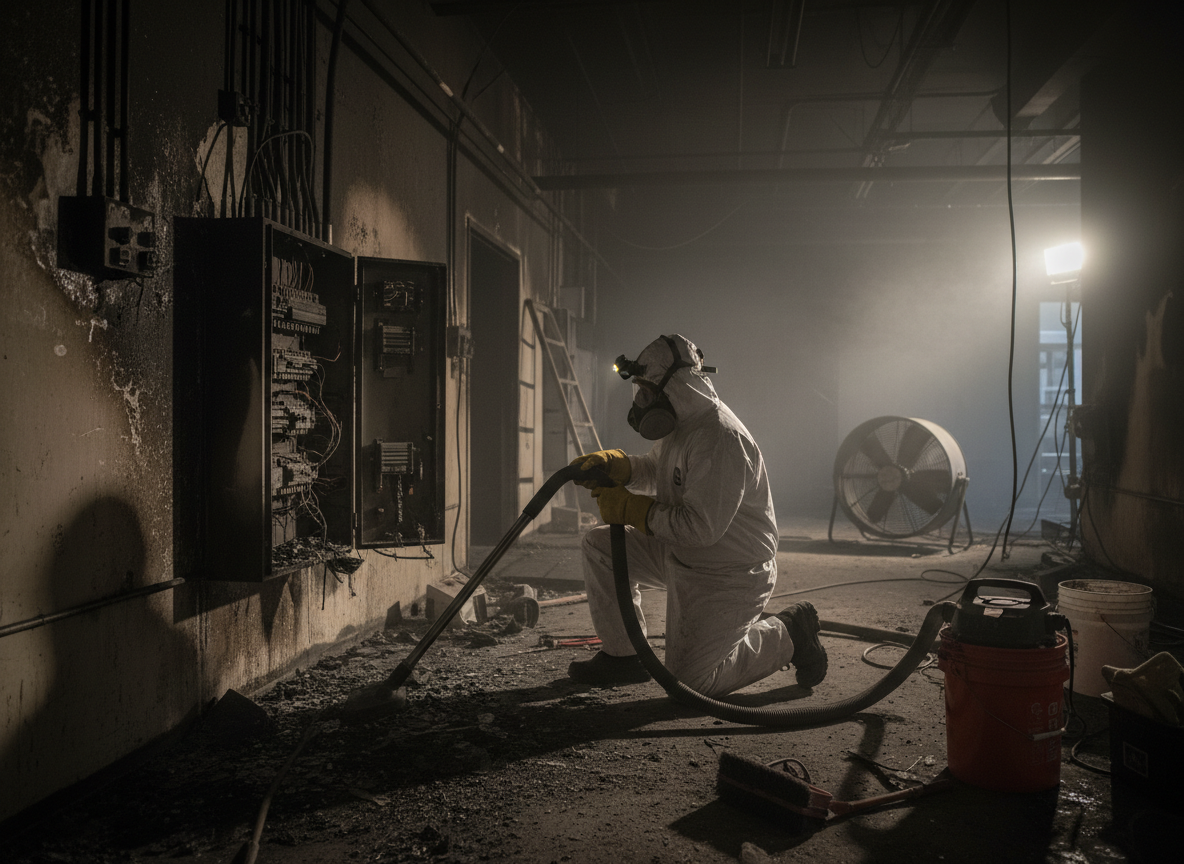
Electrical fires in Patton often start from overloaded circuits in older housing stock common around Highland Avenue and near Patton State Hospital. Hot summer temperatures in San Bernardino County push air conditioning units and older wiring beyond safe loads, leaving behind conductive soot that corrodes metal and damages electronics. Cleanup requires isolating affected circuits first, then using HEPA filtration and pH-neutral agents to remove acidic residues without spreading particles into unaffected rooms.
Mild winters here reduce some seasonal fire risks but do not eliminate hidden damage inside walls where rodents or aging knob-and-tube wiring remain common. Technicians must verify that all charred insulation is removed before any reconstruction, because residual heat can reignite weeks later if moisture from San Bernardino's occasional rains reaches the cavities. Documenting every step protects homeowners when dealing with insurance adjusters who visit from nearby cities like San Bernardino.
Edge cases include fires that travel through shared walls in multi-unit buildings near the hospital grounds, requiring coordination with multiple owners. We test for corrosive residues on copper pipes and HVAC coils, because electrical soot bonds quickly in the dry Mediterranean air and can cause long-term system failures if missed during initial inspection.
Technician insight
In Patton, the thing that catches most people out with electrical fire cleanup is how quickly soot from a summer overload travels through the old plaster walls common around the State Hospital. Homeowners try to wipe it themselves and just smear the acidic residue deeper into the wood, making the job twice as long when we arrive.
Overloaded AC Unit in Patton Duplex
An air conditioner on a 30-amp circuit failed during a July heat wave and ignited wiring inside a wall shared by two units near Highland Avenue. We isolated the panel, contained soot to the utility room, removed charred insulation, and cleaned conductive residue from both sides before the owners could safely return.
How it works
- 1
Safety Assessment
We shut off power at the main panel and inspect for live hazards before entering the structure.
- 2
Soot Containment
Plastic barriers and negative air machines prevent soot migration into clean zones of the Patton property.
- 3
Residue Removal
HEPA vacuums and specialized sponges lift acidic soot from surfaces without abrading original finishes.
- 4
Verification and Clearance
Air quality and surface testing confirm the space meets pre-loss conditions before re-entry.
Pricing
Cost depends on square footage affected, depth of soot penetration, and whether HVAC or insulation requires replacement.