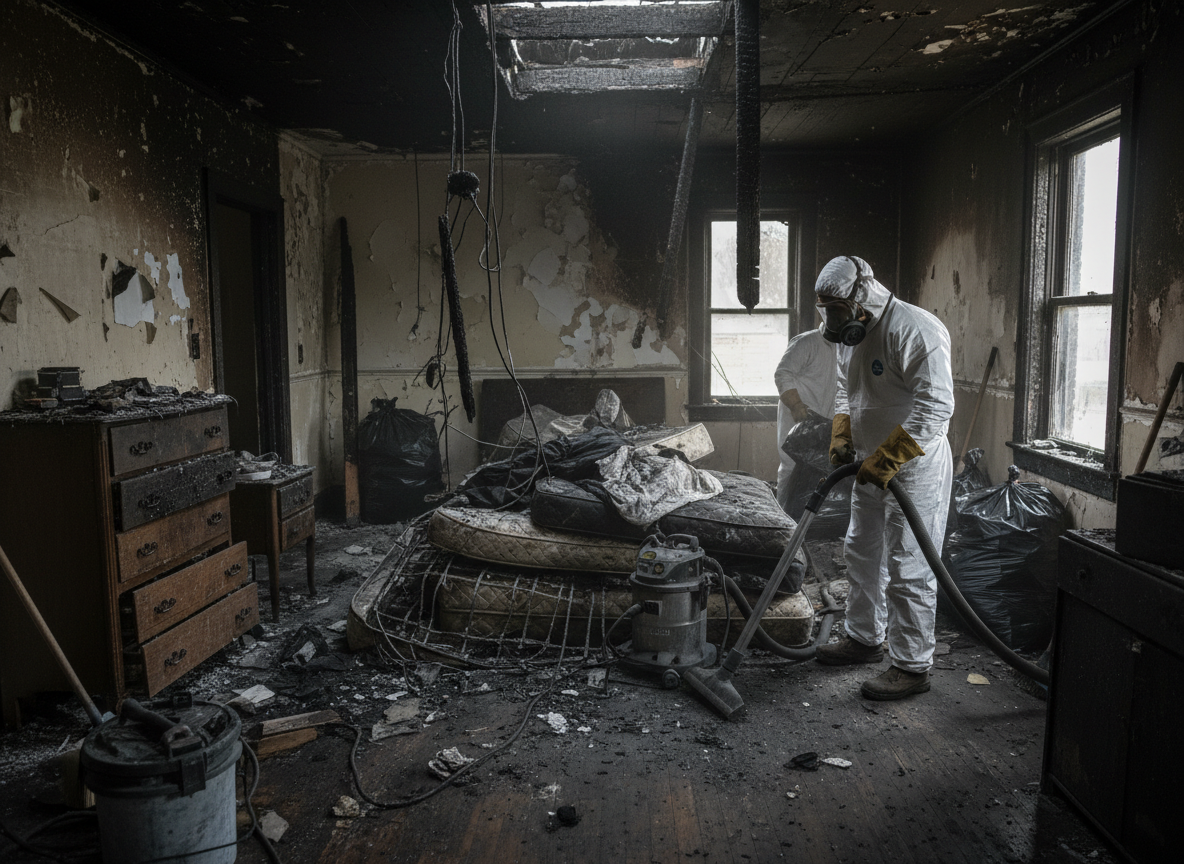
Bedroom fires in Patton often start from overloaded outlets or space heaters during the cooler months and quickly deposit heavy soot on drywall, carpet padding and mattress fibers. The Mediterranean climate with hot summers means any residual smoke odor intensifies when windows stay closed, forcing crews to run negative-air machines longer than in cooler regions. Older single-story homes near Patton State Hospital commonly have lath-and-plaster walls that absorb odors deeper than modern drywall, requiring targeted removal rather than surface cleaning alone. Technicians must also check HVAC returns that run through attics, because San Bernardino winds can push particulates into ductwork and re-contaminate cleaned rooms within days.
Cleanup begins with isolating the bedroom to prevent cross-contamination into hallways shared with other living spaces. Porous items such as curtains, bedding and area rugs are logged, bagged and removed for off-site cleaning or disposal while non-porous surfaces receive HEPA vacuuming followed by pH-neutral degreasers. In Highland and San Bernardino homes built before 1978, lead-based paint on trim demands extra containment so sanding does not release additional hazards. Final odor neutralization uses hydroxyl generators rather than ozone in occupied homes to avoid damaging electronics or fabrics still in adjacent rooms.
After visible soot is gone, moisture from suppression water is mapped with meters because Patton’s mild winters slow natural drying and can lead to hidden mold behind baseboards. Crews often replace sections of subfloor under carpet where water pooled, then reinstall new padding before homeowners return belongings. Every step is documented with photos so insurance adjusters see the exact scope without repeated site visits.
Technician insight
In Patton the thing that catches most people out with Bedroom fire damage cleanup is how quickly soot travels through the shared attic spaces of the older homes around Patton State Hospital; one summer fire we handled had migrated into three neighboring bedrooms because the mild winters kept windows shut and the negative pressure from our equipment pulled it right through the rafters.
Electrical Outlet Fire Near Highland Ave
A bedroom fire started from an overloaded power strip in a Patton home built in the 1960s. We found soot had traveled through ceiling joists into the adjacent bathroom and HVAC return. Containment barriers were set, affected drywall and carpet were removed, ducts were cleaned, and the room was rebuilt with new insulation and paint within five days.
How it works
- 1
Initial Assessment
Technician inspects the bedroom, documents soot levels on walls, fabrics and HVAC, and notes any water intrusion from suppression efforts.
- 2
Containment and Removal
Plastic barriers seal the room while damaged drywall, carpet and contents are removed and bagged for disposal or off-site cleaning.
- 3
Deep Cleaning
HEPA vacuuming, degreasing and odor treatment are applied to remaining surfaces and ductwork.
- 4
Restoration and Verification
New materials are installed, final air-quality checks are performed, and the space is returned to pre-loss condition.
Pricing
Upfront written quotes after on-site inspection; final cost depends on square footage affected and whether HVAC cleaning or structural repairs are required.