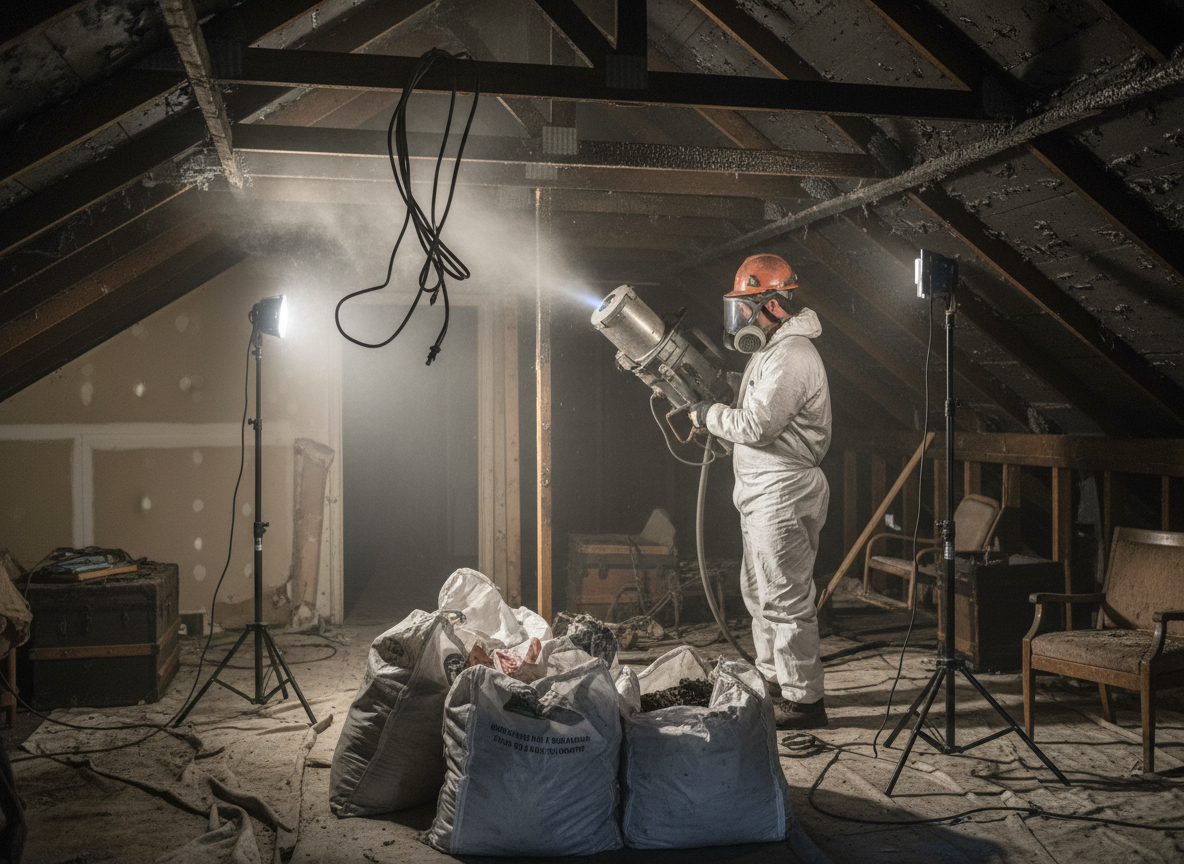
Attic fires in Patton often start from overloaded wiring in older homes built before modern electrical codes or from embers traveling through vents during hot summer months. Mediterranean climate brings intense daytime heat that bakes insulation and makes soot bond deeper into wood rafters and drywall. Restoration requires removing compromised cellulose or fiberglass batts, treating charred joists with encapsulants, and checking for hidden ember pockets that can reignite days later. Crews must also address the mild winters that allow moisture to collect in unsealed attics, turning smoke residue into acidic corrosion on metal fasteners.
Access in Patton neighborhoods is frequently limited by narrow crawl spaces and low-pitch roofs common around Highland and near Patton State Hospital. Technicians use thermal imaging to locate heat signatures behind insulation without tearing out entire ceilings. Negative air machines run continuously to keep soot from migrating into living spaces below, especially important in single-story ranch homes typical of San Bernardino County. Final clearance testing checks for VOCs and particulate levels before new insulation is installed to current energy codes.
Edge cases include knob-and-tube wiring still present in some Patton properties, which must be documented and left undisturbed or replaced by licensed electricians before insulation work resumes. Post-fire odors can linger in HVAC ducts that run through attics, requiring separate cleaning. Homeowners are advised to avoid entering attics themselves because disturbed soot becomes airborne and settles on furniture and belongings throughout the house.
Technician insight
In Patton, the thing that catches most people out with attic fire restoration is how quickly summer heat sets soot into the rafters of older homes near the state hospital. Once that happens you cannot just vacuum it off; the wood has to be sealed or the smell returns every time the attic cools at night.
Hidden ember pocket in Highland-adjacent home
A small kitchen fire sent embers into the attic of a 1960s Patton ranch house. Thermal imaging revealed an active pocket behind the insulation near the ridge vent. We removed the affected section, treated the joists, and resealed the attic before reinstalling insulation. The homeowners avoided a second fire and returned to a clean, odor-free space within five days.
How it works
- 1
Initial Assessment and Safety
Technicians arrive 24/7, secure the structure, and use thermal cameras to map remaining hot spots before any cleanup begins.
- 2
Soot and Debris Removal
All charred insulation, burned wood, and loose soot are extracted using HEPA vacuums and contained disposal methods.
- 3
Structural Treatment
Charred rafters and joists are cleaned, treated with odor sealers, and reinforced where fire weakened load-bearing members.
- 4
Insulation and Air Sealing
New insulation meeting current codes is installed after ducts and wiring are inspected, followed by attic ventilation restoration.
Pricing
Cost depends on attic size, depth of char, and whether HVAC ducts require separate cleaning.