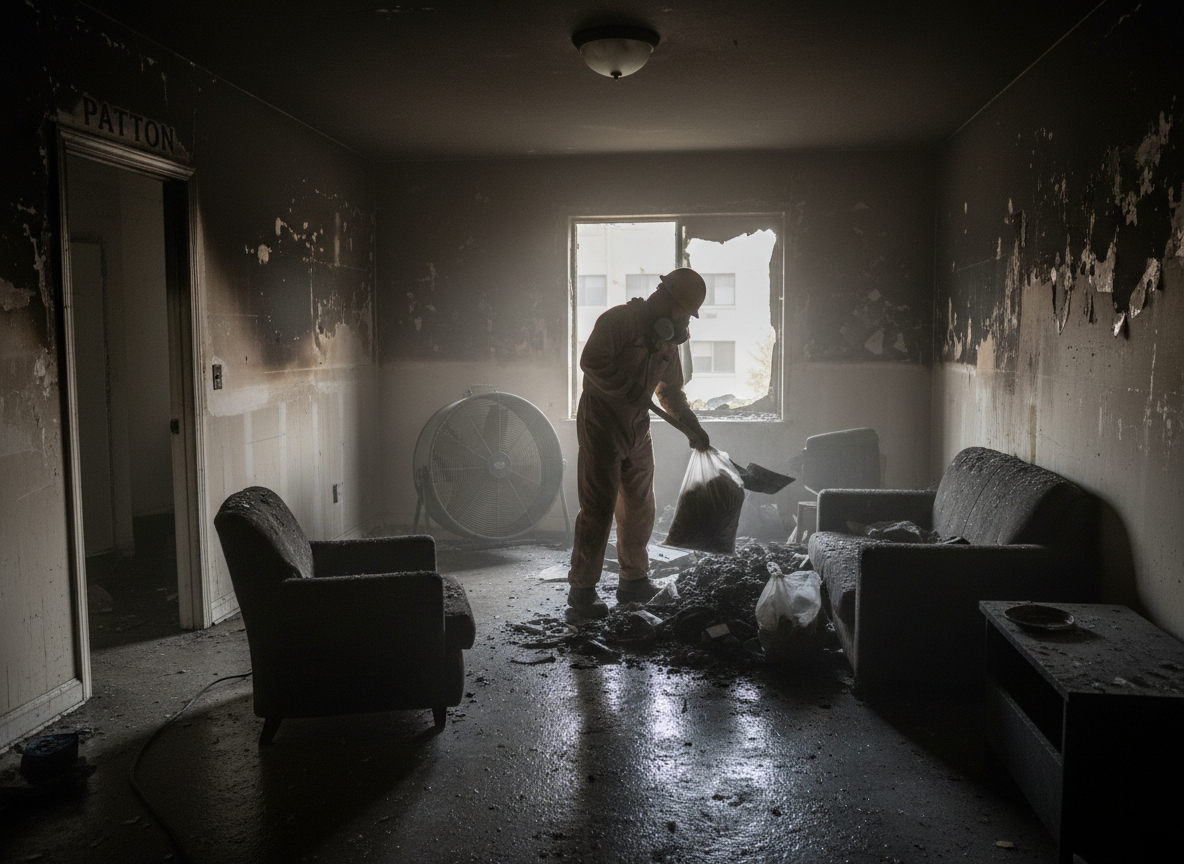
Apartment fires in Patton often involve older multi-unit buildings common in San Bernardino County, where shared walls and outdated electrical systems allow smoke and soot to travel through HVAC ducts and attic spaces. Hot summer temperatures accelerate chemical reactions in soot, turning it acidic and etching surfaces faster than in milder climates. Crews must address both the unit of origin and adjacent apartments because fire stops and insulation in these buildings frequently fail to contain contaminants completely.
Mild winters reduce natural ventilation opportunities, leaving residue to settle into carpets, drywall, and cabinetry for longer periods. Restoration teams test for hidden moisture from suppression water in concrete slabs and crawl spaces typical of Patton housing stock, as trapped water can lead to secondary mold growth within days. Odor removal requires sealing porous materials like popcorn ceilings before thermal fogging, since standard ozone treatments alone rarely penetrate the layered construction found in local apartments.
Code compliance in San Bernardino County requires documentation of all removed materials and air quality testing before reoccupancy, especially in buildings near Patton State Hospital where access routes can complicate equipment staging. Technicians prioritize contents cleaning for tenants with limited storage options, using ultrasonic methods on electronics and textiles to avoid replacement when possible. Edge cases include fires starting in laundry rooms where lint buildup combines with synthetic fabrics, creating stubborn hydrocarbon residues that demand specialized solvents.
Technician insight
In Patton, the thing that catches most people out with Apartment fire cleanup is how quickly soot bonds to the textured ceilings and popcorn finishes in 1960s-1970s apartments around Highland Avenue, especially after hot summer days when the residue sets harder before we arrive.
Smoke Migration Through Shared Vents
A kitchen fire in a Patton apartment spread soot through the building's aging HVAC system into three neighboring units. Inspection revealed residue inside ductwork and behind shared walls that standard cleaning missed. We performed full duct cleaning, removed affected drywall sections, and completed odor treatment before county clearance.
How it works
- 1
Initial Assessment and Containment
Technicians arrive within hours to document damage, test air quality, and establish negative air pressure barriers to prevent soot migration into unaffected units.
- 2
Water Extraction and Drying
Standing water from firefighting is removed using extraction equipment suited to slab-on-grade construction common in Patton apartments, followed by dehumidification to prevent mold.
- 3
Soot and Residue Removal
HEPA vacuuming and chemical sponges clean surfaces while identifying which drywall, insulation, and fixtures must be cut out due to deep contamination.
- 4
Odor Neutralization and Final Testing
Thermal fogging and hydroxyl generators address embedded smells, with clearance testing performed before returning the unit to tenants.
Pricing
Pricing depends on the number of affected units, extent of soot penetration, and whether contents require off-site processing; upfront quotes provided after inspection.