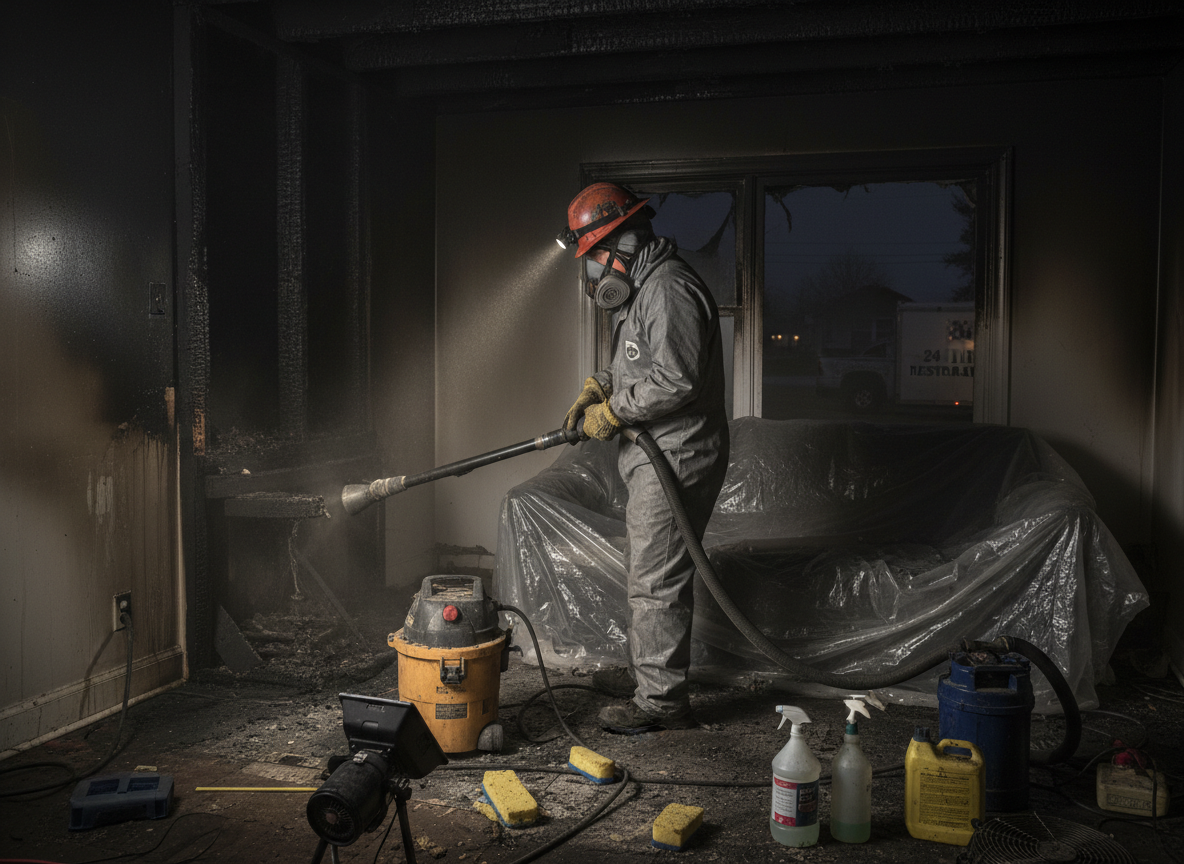
Patton homes built decades ago near the State Hospital often feature older wood framing and plaster walls that absorb smoke deeply during fires. In San Bernardino County's Mediterranean climate, hot summer winds push soot into attics and crawl spaces faster than in milder weather, requiring immediate negative air machines and thermal imaging to locate hidden residues before they set into insulation. Mild winters reduce freeze risks but allow lingering moisture from suppression water to foster mold if not extracted within the first day.
Technicians dispatched from 3102 E Highland Ave respond within hours to contain odors using hydroxyl generators suited for the dry local air that carries particles across neighborhoods into Highland and San Bernardino. Edge cases include fires starting in kitchen appliances that spread through shared walls in older duplexes, where code requires full HVAC cleaning to meet county ventilation standards. Delaying work lets acidic soot etch metal fixtures and discolor concrete foundations common on Patton slopes.
Work follows strict sequencing: board-up first to secure against weather, then debris removal, followed by HEPA vacuuming of all surfaces. Homeowners should avoid DIY cleaning on textured ceilings because agitation releases particles into living spaces. Upfront quotes follow on-site assessment of affected square footage and material types rather than flat estimates.
Technician insight
In Patton, the thing that catches most people out with 24 hour fire restoration is how summer winds funnel smoke through the older single-story homes clustered near Patton State Hospital, pushing soot into wall cavities that stay hidden until we open them up. Homeowners often try wiping surfaces themselves and just smear the acidic residue deeper into plaster.
Kitchen fire spread in a Patton duplex
A cooking fire broke out in an older home near the hospital. We found heavy soot migration through shared attic space into the neighboring unit. We performed board-up, extracted debris, and ran air scrubbers for two days until readings cleared. The family returned without lingering odors.
How it works
- 1
Emergency Board-Up
Secure openings with plywood to prevent weather intrusion and unauthorized entry while assessment begins.
- 2
Soot and Debris Removal
Clear charred materials and vacuum loose particles using HEPA equipment before odor treatment.
- 3
Deep Cleaning and Odor Neutralization
Apply specialized agents to walls, ducts, and contents then run air scrubbers suited to local dry conditions.
- 4
Final Inspection and Clearance
Test surfaces and air quality to confirm residues are gone before returning the property to use.
Pricing
Upfront quotes provided after inspection based on fire size, materials affected, and access needs.