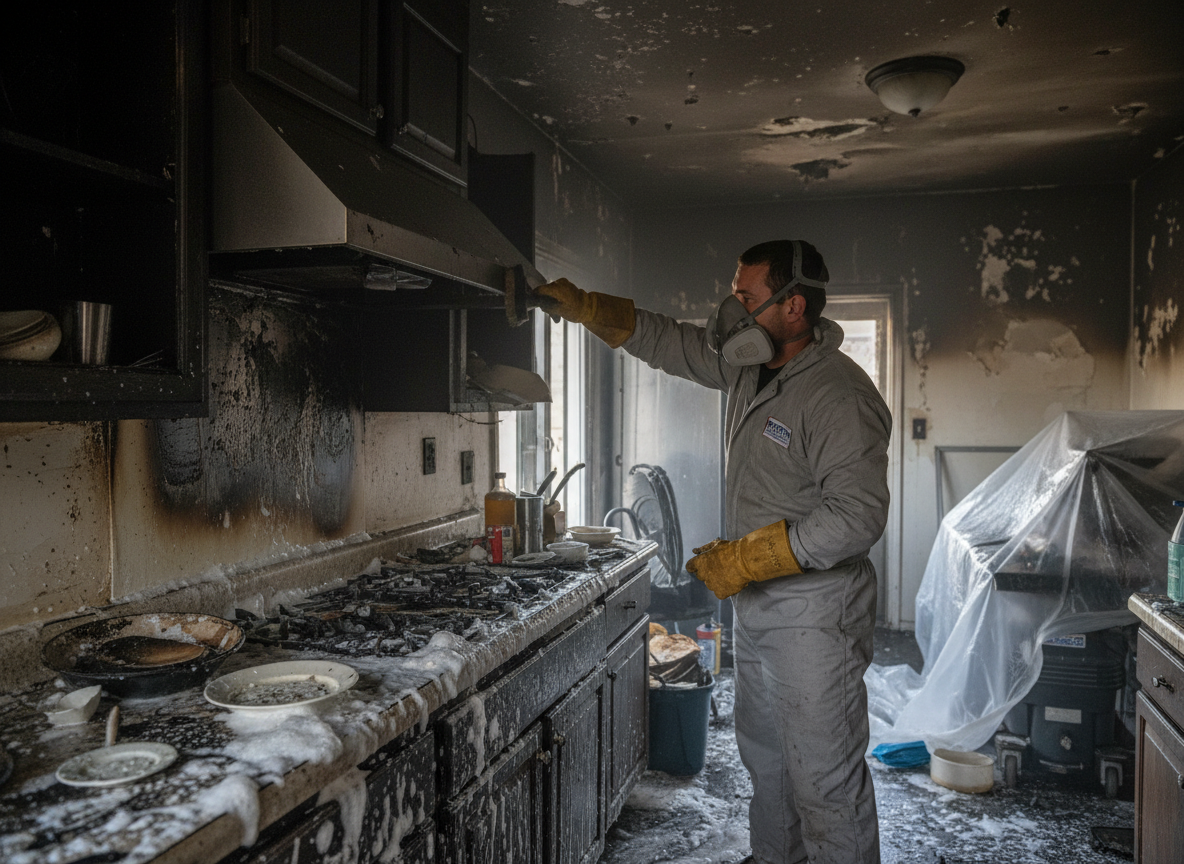
Fire Damage Restoration Patton reaches Running Springs via Highway 330 to handle structure fires in homes built on steep, forested lots. Crews from 3102 E Highland Ave arrive quickly with equipment suited to narrow driveways and uneven ground common along Hilltop Boulevard and Pinecrest Drive. Hot summer afternoons dry out pine needles and siding, so soot and smoke travel farther into attics before crews can ventilate.
Mild winters still bring enough rain to soak insulation after suppression, turning small fires into larger mold risks inside older cabins. Technicians test for hidden char behind knotty pine walls and pull carpet from concrete slabs poured on slopes that drain toward the national forest boundary. Every job starts with a walk-through that notes access points before any debris leaves the property.
Owners in Running Springs get direct updates from the same crew that stays on site until clearance. Work follows the actual layout of each lot rather than generic checklists, because one blocked access road can change drying times by days.
Around Running Springs
We regularly work near:
- 📍Hilltop Boulevard
- 📍Running Springs Post Office
- 📍Running Springs Elementary School
- 📍Deerlick Park
- 📍Highway 330
Fire Damage Restoration Patton in Running Springs — Local Notes
- •Many Running Springs homes sit on steep lots with gravel or dirt driveways that limit truck positioning, requiring smaller extraction units and extra hoses.
- •Older wooden cabins with knotty pine interiors and shake roofs hold soot deeper in crevices than newer drywall homes, extending cleaning time.
- •Summer heat and low humidity around Hilltop Boulevard speed smoke migration into attics, so crews prioritize ventilation before demolition.
- •Runoff from winter rains on sloped yards near the San Bernardino National Forest edge can carry ash into crawl spaces, demanding extra drying equipment.