2026-10-16 · Carlos Mendoza
How to Remove Soot From Patton Homes After Wildfires
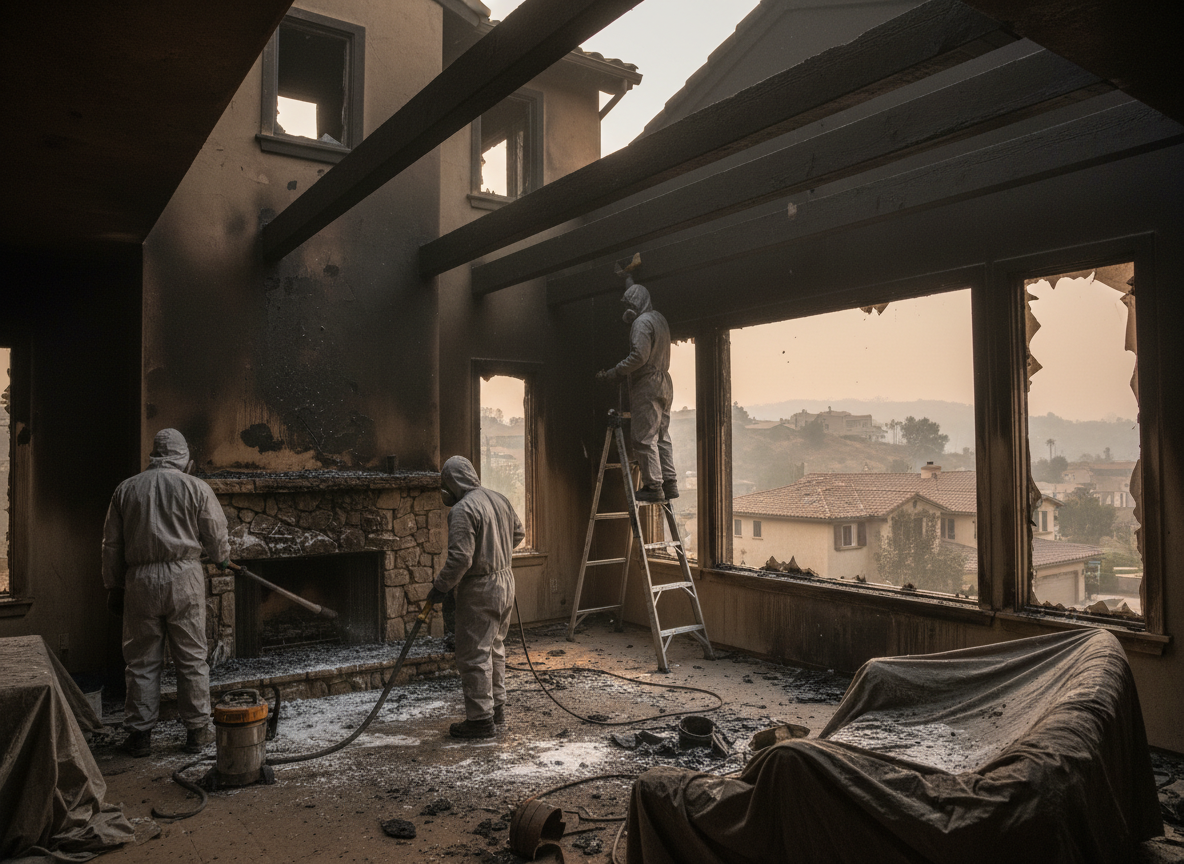
Begin by turning off HVAC systems and using HEPA vacuums with brushes to lift loose soot from walls, ceilings, and furnishings in Patton homes before any moisture is introduced. This approach prevents smearing on porous materials common in San Bernardino County’s older single-family houses built before 1970. Work from the top down in small sections while wearing PPE, and test a hidden spot first to avoid permanent discoloration on drywall or wood trim typical around Patton State Hospital.
Initial Safety Steps and Damage Assessment
Assess every room for visible soot layers and hidden deposits in attics and HVAC ducts, which spread quickly through Patton’s single-story ranch homes during Santa Ana wind events. Document all affected surfaces with photos before any cleaning begins. Check for structural weakening in older plaster and lath walls common in the area. Contact local utility providers to confirm electrical safety in homes near Highland and San Bernardino. Residents should review what Patton residents should do in the first 48 hours after a fire to coordinate with insurance adjusters early. Proper assessment reveals whether soot has penetrated insulation or subflooring, changing the scope of work in Mediterranean climate zones where temperature swings accelerate residue bonding.
Dry Cleaning Techniques for Porous Surfaces
Use natural sponges and dry cleaning soot sponges on walls and ceilings first, changing sponges frequently to avoid re-depositing particles in Patton’s low-humidity summers. Vacuum upholstery and carpets with crevice tools and HEPA filters rated for fine particulates. For wood cabinets and trim found in many local homes, apply a dry lubricant followed by microfiber cloths. Avoid water-based products until dry methods are exhausted, since moisture can drive soot deeper into concrete slabs and stucco exteriors prevalent in San Bernardino County. Repeat passes until no residue transfers to white cloths. This phase typically takes 4–8 hours per average 1,500-square-foot Patton residence depending on soot density from nearby wildfire events.
Wet Cleaning and Odor Control Methods
Once surfaces are dry-cleaned, mix a pH-neutral detergent solution for non-porous items like tile and glass around Patton homes. Apply with microfiber cloths in overlapping strokes, rinsing frequently. For stubborn residues on kitchen surfaces, use a degreaser formulated for carbon-based soot. Follow with thorough rinsing and drying using fans to counter mild winter humidity that slows evaporation in the region. Address odors by placing activated charcoal bags in closets and running air scrubbers. Homeowners can explore smoke damage restoration and soot removal options for persistent cases. In San Bernardino County’s climate, complete drying within 48 hours prevents secondary mold growth on remaining damp materials.
Protecting Patton Homes Long-Term
After cleaning, replace HVAC filters with MERV-13 or higher and seal attic penetrations to limit future soot entry during wildfire season. Monitor for recurring odors in older homes near San Bernardino where wind patterns carry ash from surrounding hills. Schedule seasonal inspections before hot summers when increased AC use can recirculate missed particles. Review seasonal smoke and ash cleanup tips for Patton homes for ongoing maintenance. These steps reduce repeat cleaning needs in the Mediterranean climate where temperature fluctuations expand and contract building materials, reopening microscopic soot pathways.